
IP Toy Trend: China’s Trendy Toy Industry Outlook
- See Qian

- 2 days ago
- 4 min read
China’s trendy toy industry is no longer a niche corner of pop culture. It has become one of the clearest examples of how emotional consumption is reshaping retail in China. The market is moving from simple collectibles into a broader IP-led economy, where characters, stories, communities and shopping experiences all work together to create “mood value” for younger consumers.
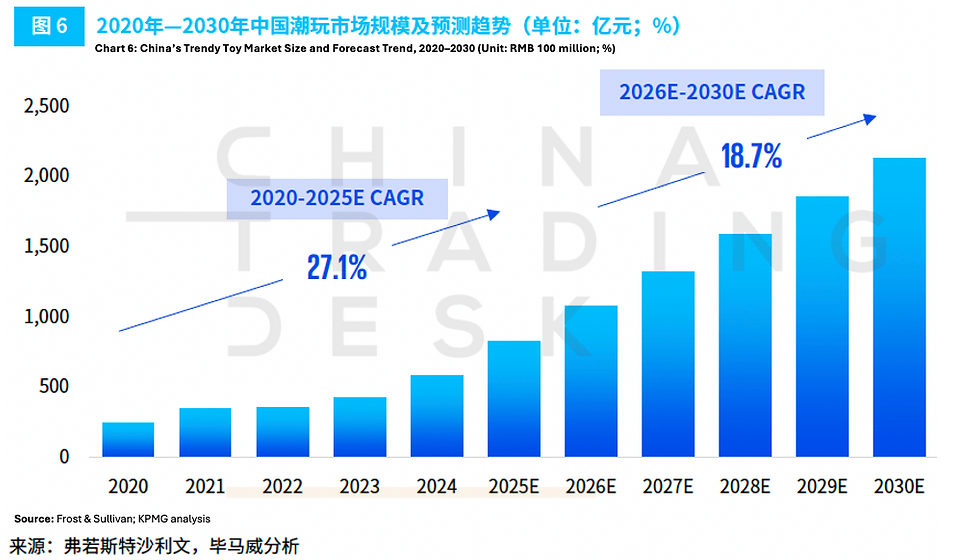
According to KPMG’s Trendy Toy Industry Outlook, China’s trendy toy market was worth RMB58.7bn in 2024, up 36.5% year on year. Looking further ahead, the market is forecast to exceed RMB213.3bn by 2030, supported by an expected 2026–2030 CAGR of 18.7%.
Why China’s Trendy Toy Market Is Growing
The core growth driver is emotional value. Trendy toys are not only bought for play or display; they are bought for comfort, identity, self-expression and social sharing.

Several forces behind the market’s rapid growth:
Gen Z emotional consumption is creating stronger demand for mood-led products.
IP ecosystems are becoming more mature.
Omni-channel retail is turning shopping into experience.
AI technology is pushing toys from static objects to interactive companions.
Policy and capital support are helping the industry scale.
This makes trendy toys a useful signal for wider China consumer trends. The market is showing how younger consumers are shifting from buying products to buying emotional connection.
The Real Battleground Is the IP Ecosystem
China’s trendy toy industry is no longer just about selling blind boxes, figures or plush toys. The bigger opportunity is the IP ecosystem: how brands create characters, turn them into products, build communities and keep consumers emotionally engaged over time.

IP now sits at the centre of the trendy toy value chain, connecting creation, design, manufacturing, retail and consumer engagement.
Key parts of the IP ecosystem include:
Upstream IP creation
Brands create original characters or license existing IP. The strongest characters have a clear visual identity, emotional hook and story world.
Midstream product development
IP is turned into sellable formats such as figures, plush toys, blind boxes, 3D models and limited-edition collectables.
Downstream retail and community
Brands monetise IP through e-commerce, pop-ups, flagship stores, social media, fan communities and offline events.
Long-term IP management
A single hit character can create short-term sales, but sustainable growth depends on a wider IP portfolio, regular product drops and ongoing fan engagement.
For trendy toy brands, the lesson is clear: IP should be managed as a living asset. Characters need new stories, seasonal updates, collaborations and community interaction to stay relevant.
Omnichannel Retail Is Turning Toys Into Experiences
Retail is becoming a major growth engine for China’s trendy toy market. Consumers no longer discover and buy trendy toys through one channel only. They may first see a character on Xiaohongshu, Douyin or ecommerce platforms, then visit a pop-up store, join a fan community or buy limited-edition products offline.
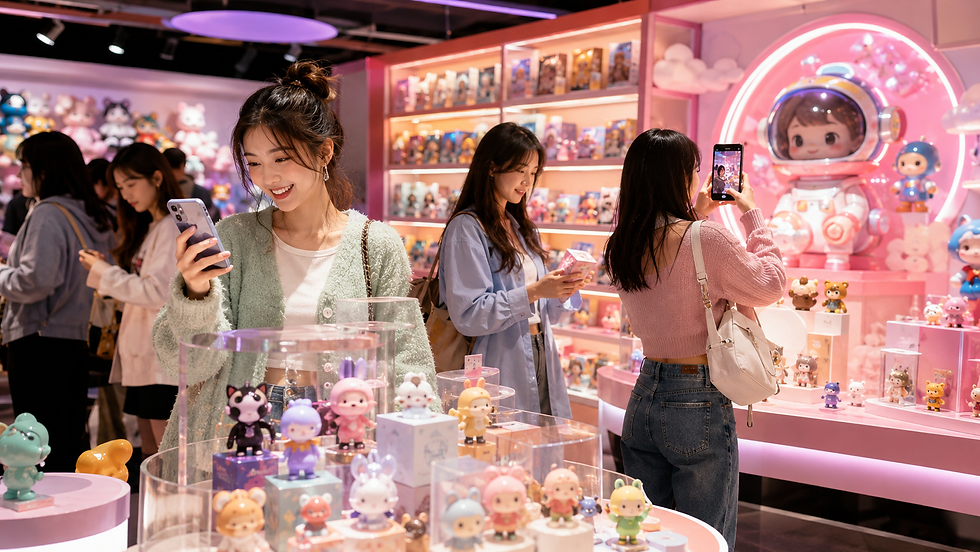
This shift matters because stores are becoming more than sales points. They are now:
Experience spaces for IP storytelling
Photo-friendly locations that encourage social sharing
Traffic drivers for malls and commercial venues
Launch platforms for limited-edition products
Community touchpoints for fans and collectors
The strongest brands will connect online buzz with offline conversion. Social content should drive store visits, stores should create shareable moments, and private communities should encourage repeat purchases.
Sustainability is also becoming part of the omnichannel story. Greener materials, low-carbon supply chains and second-hand circulation are gaining importance as younger consumers pay more attention to environmental value.
AI Could Create the Next Product Leap
Artificial intelligence could push trendy toys beyond static collectables: smart toys use AI chips, sensors, voice recognition and large AI models to support dialogue, emotional interaction and personalised companionship.

The opportunity is not simply to add technology for novelty. The stronger commercial play is to use AI to create deeper emotional value.
Possible AI toy opportunities include:
Interactive companion toys that talk, listen and respond
Character-led AI products that use familiar IP voices and personalities
Educational toys for children
Emotional companion dolls for adults
Smart companion products for elderly care
App-linked collectables that extend the IP world beyond the physical toy
A useful case-study angle is the “interactive companion” model. Instead of selling a toy as a one-off collectible, brands can create characters that remember preferences, respond to moods and connect back to a wider story world.
However, AI also raises the entry barrier. Smart devices, software systems and product testing require higher investment. Larger companies with stronger capital and technology partnerships may therefore move faster than smaller trendy toy brands.
Globalisation Brings Opportunity and Risk
China’s trendy toy companies are increasingly looking overseas, but global growth is not just about exporting products. It is about exporting Chinese IP, culture and emotional value in a way that overseas consumers can understand.

Overseas expansion can become a new growth point for the industry, but brands must manage localisation, certification, logistics and IP protection carefully.
The key opportunities include:
Taking Chinese IP to global consumers
Using cute and playful design to reduce cultural barriers
Building overseas fan communities
Partnering with local retailers and distributors
Creating culturally readable stories for different markets
The report also highlights how Chinese cultural symbols can be reimagined through trendy toy design. For example, mythology-inspired characters can make traditional Chinese culture feel more accessible, playful and emotionally engaging for overseas audiences.
A character that performs well in China may need different storytelling, product positioning and retail strategy in other markets. Chinese trendy toy IPs are becoming more exportable, but they need the right local storytelling, channel strategy and community-building model to scale internationally.
What brands should do next
China’s trendy toy market is entering a more competitive phase. Growth remains strong, but the winners will be brands that can build repeatable IP systems rather than rely on one-off hits.
Priority actions:
Build a balanced IP portfolio across original characters, licensed IP and artist-led collaborations.
Expand product formats across figures, plush, models, accessories and interactive products.
Connect online and offline journeys through social content, pop-ups, experience stores and private communities.
Use AI carefully to deepen emotional value, not just add novelty.
Prepare for global expansion with localisation, IP protection and channel discipline.
China’s trendy toy outlook is therefore bigger than a toy industry story. It is a signal of where consumer value is heading: towards identity, companionship, culture, experience and IP-led emotional connection.
Get in touch with our team to explore how trendy toy IP, omnichannel retail and emotional consumption trends can shape your next growth strategy.


Comments