
2025 “Anxiety” on Xiaohongshu: From Hidden Stress to Visible Demand Signals
- See Qian
- Jan 15
- 5 min read
What brands, retailers, and marketers need to know about how anxiety is shaping content, community, and conversion
Anxiety Is No Longer a Mood , it’s a Decision Engine
Scroll Xiaohongshu today and you’ll see it immediately: emotions are being turned into “internet-native” language and shared as lived experience. From “松弛感” (relaxed vibe) to “脱美役” (rejecting beauty labour) and countless micro-terms that make feelings searchable and actionable. In this landscape, anxiety has become impossible to ignore.
The report notes that over the past year, the number of commercial notes related to “anxiety emotion” grew by more than 112%, with estimated interactions surpassing 100 million, a signal that anxiety-themed content is not only a traffic trigger, but increasingly an “invisible lever” shaping user decisions.
That changes the brand question from “Should we talk about anxiety?” to “How do we respond without sounding opportunistic?” Because on Xiaohongshu, users are not simply consuming content. They are looking for reassurance, structure, and practical relief.
The Four Anxiety Landscapes Brands Need to Understand
The report breaks Xiaohongshu anxiety content into four major types: health anxiety, appearance anxiety, relationship anxiety, and survival anxiety.

They are different in tone, but they share one critical feature: each turns emotional pressure into daily behaviours, content formats, and product demand signals. For brands, these are not “soft insights”. They are actionable routes to relevance, product innovation, and message-market fit.
Health Anxiety: “Small Symptoms”, Big Need for Control

Health anxiety is becoming more granular. Instead of dramatic illness narratives, users obsess over subtle discomforts: insomnia, hair loss, constipation, hairline recession, irregular periods, posture curvature, and other “small problems” that feel constant. Previously ignored issues such as tinnitus, migraines, floaters, varicose veins, and memory decline are also rising in visibility.
One of the clearest signals is the “body signal” narrative. The report highlights that #拥抱我的身体信号 (“embrace my body signals”) exceeded 900 million views, reflecting how younger users are learning to interpret minor symptoms as meaningful data.
The deeper insight is emotional: this isn’t simply hypochondria, it is a search for agency. Users track bodily signals to reclaim a sense of order in an uncertain life. That’s why empathy matters: when the issue is “light discomfort”, what users want most is to be seen and understood, not lectured.
AI “digital diagnosis”: Technology as emotional reassurance
Health content is also becoming “tech-enabled”. The report notes significant growth in “AI” and “technology” keywords in commercial notes, with AI-related note volume up 279% and interactions up 233%, while technology-related note volume rose 183% and interactions 62%.
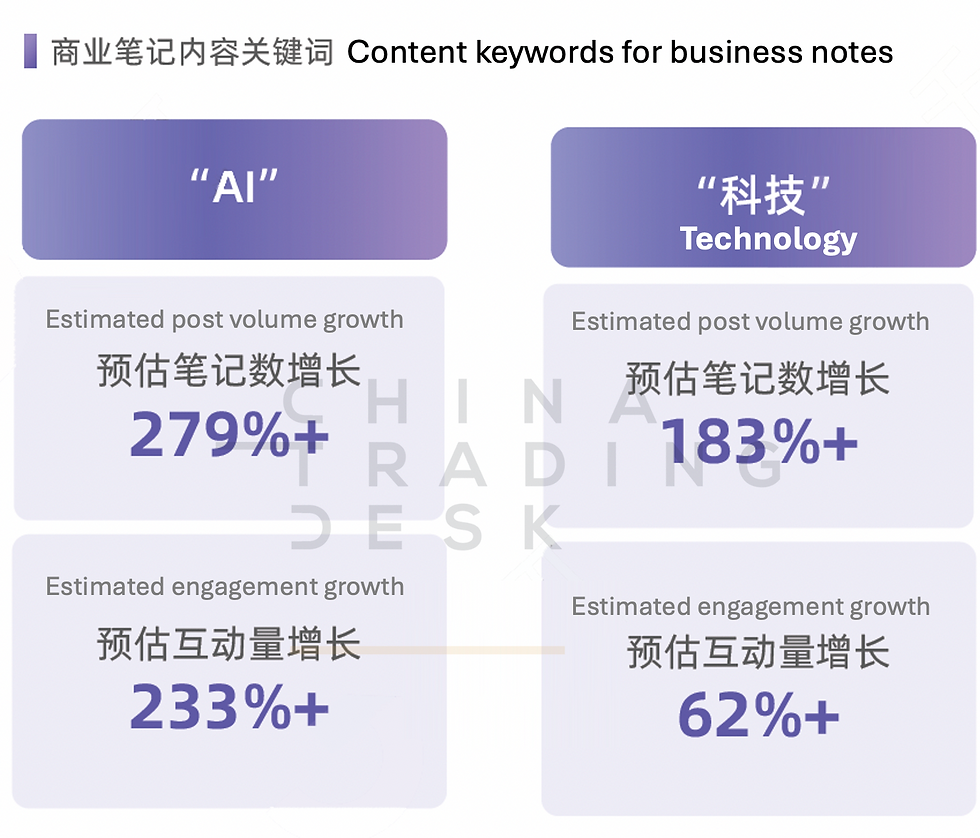
From wearables to sleep-support products, “AI health” is shifting from abstract tool to everyday “health advisor”. The report frames the essence of AI health as reconciling with anxiety: users want certain feedback that turns fuzzy fear into manageable daily data.
A practical brand implication: “AI” is not merely a feature, it is a promise of measurable calm. If brands can tie technology to trust and routine, they’re not just selling devices; they’re offering reassurance.
Appearance Anxiety: From Standardised Beauty to Self-Authored Identity

Appearance anxiety is no longer only about “looking pretty”. The report argues it has shifted towards a deeper fear, losing individuality and “presence” under uniform standards, such as A4 waist, right-angle shoulders, “white-slim-young”, and the pressure of “beauty labour”.
Yet the counter-movement is equally strong. Users are reclaiming aesthetics through “aesthetic rebellion”, playful, even absurd expression (e.g., “abstract makeup”, “twisted face-shaping”), autumn “new skin” styling trends, and content that reframes beauty as creativity rather than compliance.
Commercially, appearance anxiety content is surging: the report indicates commercial note volume up 99%, with strong monthly interaction levels.
Meanwhile, “aesthetics” as a keyword is booming with note volume up 138% and interactions up 63% , alongside topics like #脱美役 (rejecting beauty labour), #拒绝容貌焦虑 (reject appearance anxiety), and #穿衣自由 (freedom to dress).
The brand role: stop “defining beauty”, start supporting expression
The report’s strategic message is clear: the opportunity is not to impose a new standard, but to become a steadfast ally, rejecting aesthetic discipline, celebrating diversity and authenticity, and designing products that enable self-expression.
A featured example is 7or9 where marketing shifts from one-way “gaze” to two-way “listening”, using product innovation to resolve the false binary between beauty and comfort, and positioning the brand as a “support system” rather than a judge.
Relationship Anxiety: “Always Online”, Yet Still Seeking Response
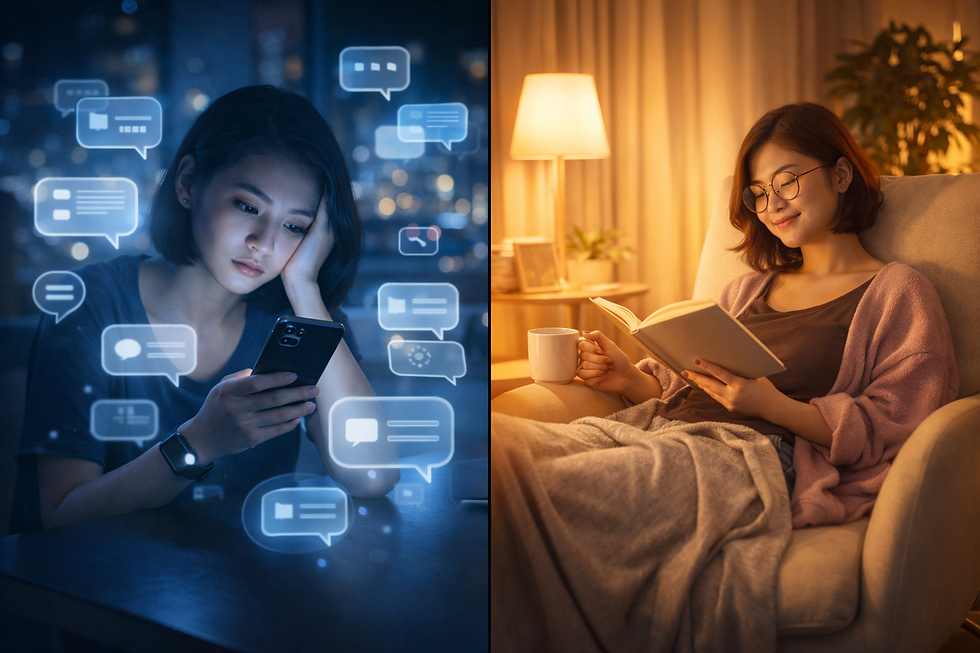
Relationship anxiety reflects a paradox: intimacy feels like a luxury, but emotional needs remain in motion. Users talk about “electronic parents”, “companions” (搭子), anti-PUA humour, and the desire to build flexible support systems.
Commercial signals are strong here too: relationship anxiety commercial notes rose 101%, while commercial note comments increased 60%, suggesting a category where conversation and community validation are central.
Content maps also show how relationships are being redefined: terms like “best friend”, “parents”, “children”, and “colleagues” rise, alongside trending topics such as #搭子, #职场相处, #婚姻情感, and #原生家庭.
Loneliness becomes lifestyle: the “one-person universe”
Rather than escaping loneliness, many users are ritualising it. High-heat topics like #一人食 and #独居生活 remain prominent, with “healing” and “comfort” appearing as key comment emotions. Users also project feelings into pets, emotional games, and AI “agents”.
For brands, this is a major pivot: move beyond “family gifting” and “togetherness” as default narratives, and design for solo convenience plus ritual value, products and content that make a one-person moment feel meaningful.
Survival Anxiety: From Outcome Obsession to “Process Philosophy”

Survival anxiety is increasingly framed as a fight between “performance ideology” and “living fully”. Users are loosening the social clock, accepting imperfect selves, and redefining success through resilience, skill-building, and meaning reconstruction.
Commercially, this theme is accelerating: survival anxiety commercial notes up 129%, with shares up 115%, a sign the content is resonating as something people want to pass on.
The report also highlights growing interest in “side hustle” narratives (Engagement growth of 76% ), “night school”, and “after-work second lives”, suggesting that when a single success script collapses, people actively search for new routes forward.
Crucially, survival anxiety is “upgrading” into meaning: beyond survival, users are asking “why live?” Keywords like “value” and “meaning” generate high interaction, and emerging topics encourage cultural and humanistic creation from everyday details.
The Path Forward: Becoming a “Meaning Container”, Not an “Emotion Spokesperson”

The report’s concluding recommendation is unusually sharp: in an era where anxiety is everywhere, brands win not by performing empathy, but by providing real solutions, acting as a “meaning container” rather than an “emotion spokesperson”.
To build credibility and conversion on Xiaohongshu, brands should:
Offer structure for health anxiety: translate expertise into easy daily support that restores a sense of order and control.
Protect freedom in appearance anxiety: champion authentic expression and design products that enable individuality, not conformity.
Serve both connection and solitude in relationship anxiety: build scenarios for “light social” and “solo rituals”, and create experiences worth remembering.
Support resilience and meaning in survival anxiety: move beyond functional selling to become a companion in growth, learning, and self-defined success.
Conclusion
On Xiaohongshu, anxiety isn’t just an emotion, it’s a demand signal. Across health, appearance, relationship, and survival themes, users are actively searching for control, reassurance, and practical solutions they can apply in daily life.
For brands, the opportunity isn’t to “speak about anxiety”, it’s to solve for it: reduce friction, offer credible guidance, design supportive scenarios, and show up with cultural fluency rather than performative empathy.
So the real question is: where is anxiety already shaping your category, and what could your brand build (content, products, partnerships) that genuinely helps?
If you’d like to translate these anxiety-driven demand signals into a clear strategy, reach out to our team.


Comments